Shose expert

15 Years Manufacturing Experience
DSC00533

China Top 10 Private Label Sneaker Manufacturers?

China Top 10 Private Label Sneaker Manufacturers? This guide examines factories that turn a rough sketch into a shelf-ready product. It focuses on capability, not impressive promises. A dependable supplier should explain minimum order quantities, sample fees, material choices, production timing, and quality controls clearly.

Matt Priest, president and CEO of the Footwear Distributors and Retailers of America, has said, “Footwear is a global industry.” That reality makes supplier selection more complex. A workshop in Jinjiang may offer excellent rubber compounds, while a factory in Dongguan may provide stronger development support. Buyers must compare factories against their own product goals, budget, market, and expected order volume.

The review considers factory experience, development teams, upper construction, outsole consistency, stitching, packaging, and export communication. It also looks at practical evidence, such as sample accuracy and how a supplier handles revisions. Certifications can support trust, but they do not replace production checks. Small details matter. A crooked logo matters. So does a delayed size set.

No ranking is perfect. Manufacturing conditions change, and online information can become outdated. Some factories show beautiful samples but provide limited information about capacity. Others communicate plainly yet deliver reliable work. That difference deserves attention. For brands exploring Private Label Sneakers, this list offers a practical starting point, not a final decision. Request current samples, verify business credentials, discuss written specifications, and inspect quality before committing to larger production.
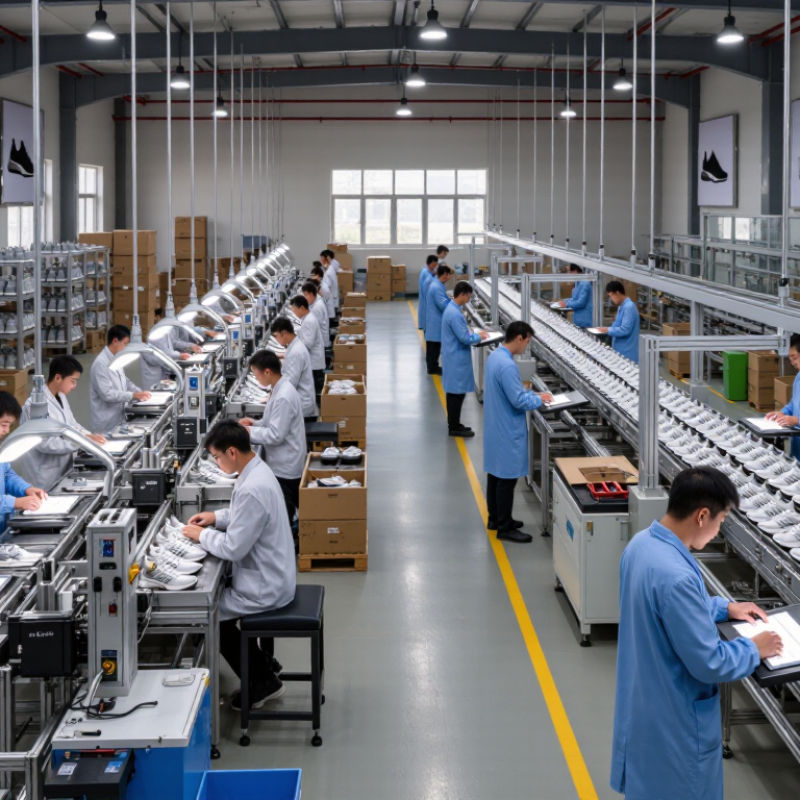
China Top 10 Private Label Sneaker Manufacturers?

What Defines a Private Label Sneaker Manufacturer in China?

China Top 10 Private Label Sneaker Manufacturers?

A private label sneaker manufacturer produces footwear under a buyer’s label, not its own retail identity. It should support design development, material selection, sampling, production, packaging, and quality control. A true manufacturer can explain its factory location, production capacity, worker processes, and inspection methods. A trading company may coordinate these services, but that difference must remain clear.

Technical ability matters more than attractive product photos. Ask whether the factory can manage outsole molds, stitching accuracy, bonding strength, and size consistency. Request sample revisions and written specifications. Check material certificates, test reports, factory audits, and shipment inspection records. Reliable suppliers also explain minimum order quantities, lead times, defect policies, and production limits. A polished sample can still mislead. Bulk quality may change without strict controls.

Tips: Start with one practical model and a small test order. Compare the approved sample with random finished pairs. Inspect heel alignment, glue marks, flexing, and carton labels. Keep every measurement in writing. Never choose from price alone; low costs can hide weaker materials or unstable production. Also, do not assume a factory is suitable because it claims export experience. Verify evidence, and leave room for honest doubt.
How to Evaluate China’s Top 10 Private Label Sneaker Manufacturers

China’s leading private label sneaker manufacturers should be judged by evidence, not factory photos. The World Footwear Yearbook 2024 reports that China produced about 54.6% of global footwear in 2023. Scale is impressive. It does not guarantee consistent quality.

I evaluate each supplier through a small pilot order. I inspect upper stitching, heel support, outsole bonding, and size tolerance. A reliable factory should provide material specifications, inspection records, and clear production milestones. The International Organization for Standardization reports that ISO 2859-1 sampling is widely used for acceptance inspections. Ask which inspection level they follow. Vague answers are warning signs.

Capacity also requires careful testing. Compare minimum order quantity, sample timing, production lead time, and monthly output. Grand View Research estimates the global athletic footwear market will grow at roughly 5% annually through 2030. Demand may rise, but rushed factories can still miss delivery dates. Request a factory audit, worker-safety evidence, and chemical test reports for adhesives and coatings. Verify them independently. Communication matters, too. A supplier that hides defects during sampling may create larger problems later. I would not rank a manufacturer highly because of a low quotation alone. Price is only one variable, and sometimes the least reliable one.

China Top 10 Private Label Sneaker Manufacturers: Evaluation Framework

A practical procurement-weighting model for comparing private label sneaker manufacturers. The criteria focus on the factors most relevant to sourcing decisions: product quality, customization, production flexibility, compliance, delivery performance, and communication.

The percentages represent recommended evaluation weights rather than company rankings or brand performance data. Buyers can adjust the weights according to their product category, order volume, and target market.

China’s Top 10 Private Label Sneaker Manufacturers by Specialty

China Top 10 Private Label Sneaker Manufacturers?

China’s Top 10 Private Label Sneaker Manufacturers by Specialty

China’s strongest private label sneaker manufacturers often lead in different areas, not every category. One may specialize in lightweight running shoes, while another focuses on vulcanized canvas styles. Some excel at basketball cushioning, outdoor grip, recycled materials, children’s sizing, or small-batch development. Others offer advanced knit uppers, wide-fit construction, luxury finishing, or fast private label sampling. The tenth specialty is often flexible production for emerging footwear labels.

From factory visits and sample reviews, practical evaluation matters more than a polished catalog. Check stitching around the toe box, glue marks near the sole, heel counter strength, and insole compression. Ask for material specifications, testing records, production photos, and clear minimum order quantities. A reliable manufacturer should explain mold fees, sample revisions, lead times, inspection stages, and packaging details without vague promises. Communication quality is part of manufacturing quality.

Tips: Request one physical sample before placing a bulk order. Wear-test it on concrete, stairs, and uneven pavement. Compare the approved sample with the production pair. Small differences can become costly. Also, do not assume the lowest quote offers the best value. I have seen attractive samples fail during repeated flex testing, while simpler designs performed better. No factory is perfect, and each specialty requires careful verification before commitment.

China Top 10 Private Label Sneaker Manufacturers by Specialty
No. Specialty Typical Product Focus Common Materials Typical MOQ Typical Lead Time Key Manufacturing Strength
1 Vulcanized Canvas Sneakers Low-top, high-top and casual canvas shoes Cotton canvas, rubber, polyester lining 300–500 pairs per color 25–35 days after approval Efficient vulcanization, rubber foxing and seasonal color development
2 Leather Lifestyle Sneakers Minimal court shoes and premium everyday sneakers Cow leather, microfiber, mesh, EVA and rubber 500–1,000 pairs per style 35–45 days after approval Pattern accuracy, clean edge finishing and cupsole construction
3 Running and Performance Sneakers Road-running, training and lightweight athletic footwear Engineered mesh, TPU, EVA, rubber and knitted textiles 1,000–2,000 pairs per model 45–60 days after approval Multi-layer sole assembly, cushioning development and wear testing
4 Knit and Flyknit-Style Sneakers Sock-fit casual shoes and breathable training sneakers Polyester knit, recycled yarn, TPU and EVA 800–1,500 pairs per color 35–50 days after approval Digital knitting, seamless uppers and lightweight construction
5 Basketball Sneakers High-top and mid-top court footwear Synthetic leather, mesh, molded TPU, EVA and rubber 1,000–2,000 pairs per model 45–60 days after approval Ankle support, reinforced toe boxes and traction outsole design
6 Skateboarding Sneakers Low-top skate shoes and durable street footwear Suede, canvas, abrasion-resistant mesh and vulcanized rubber 500–1,000 pairs per style 30–45 days after approval Reinforced panels, grip-focused outsoles and abrasion control
7 Eco-Friendly Sneakers Sustainable casual, lifestyle and athleisure footwear Recycled polyester, organic cotton, bio-based foam and recycled rubber 800–1,500 pairs per style 40–55 days after approval Material traceability, recycled-content documentation and low-waste cutting
8 Slip-On and Knitted Casual Shoes Travel shoes, walking shoes and everyday slip-ons Stretch knit, mesh, microfiber, EVA and rubber 300–800 pairs per color 25–40 days after approval Fast sampling, flexible uppers and simplified assembly
9 Children’s and Youth Sneakers School, sport and casual footwear for children Mesh, synthetic leather, textile lining, EVA and rubber 500–1,000 pairs per size range 30–45 days after approval Child-size grading, flexible soles, secure closures and safety testing support
10 Custom Molded and Chunky Sneakers Retro runners, platform sneakers and fashion silhouettes PU, EVA, mesh, synthetic leather and rubber 1,000–3,000 pairs per mold design 50–70 days including mold development Custom tooling, multi-density soles and complex decorative components
Note: MOQ and lead-time figures are typical private-label manufacturing ranges in China. Actual requirements vary according to materials, tooling, testing, order quantity, packaging and seasonal production capacity.

How Private Label Sneaker Production Works from Design to Delivery

Private label sneaker production in China usually begins with a clear product brief. It should define the target customer, upper materials, sole structure, size range, colors, and expected retail price. A factory then reviews sketches, reference shoes, and technical drawings. Good communication matters here. Vague requests often create expensive revisions later.

The development team converts the concept into a sample. Designers check the last, stitching lines, cushioning, logo placement, and outsole grip. Material swatches should be tested for color stability, flexibility, and surface wear. A sample may look attractive but feel uncomfortable after thirty minutes. That detail is easy to miss. Wear testing and size fitting can reveal problems before production begins.

After approval, the factory prepares a production sheet and confirms material quantities. Cutting, stitching, lasting, sole bonding, cleaning, and packing follow controlled steps. Inspectors check dimensions, glue marks, seam strength, and carton labels. Buyers should request photos, inspection records, and random sample checks before shipment. Delivery planning includes production time, inland transport, export documents, and final freight. Delays can still happen when materials arrive late or a revised sample is not clearly approved. Careful records reduce confusion, although no production plan is perfect.

Key Factors for Choosing the Right Chinese Sneaker Manufacturer

Choosing the right Chinese private label sneaker manufacturer requires more than comparing prices. Factory experience matters, but practical proof matters more. Ask how many years the team has produced similar sneaker constructions. Request recent samples with matching materials, stitching, outsole bonding, and logo placement. A factory may show attractive catalog photos, yet the delivered sample can feel different. Inspect it carefully.

Production control is another key factor. Reliable manufacturers should explain their material sourcing, mold management, size grading, and final inspection process. Ask for a clear production timeline, minimum order quantity, and replacement policy for defective pairs. Communication also deserves attention. Fast replies are useful, but accurate answers are better. Technical drawings, approved samples, and written specifications reduce avoidable mistakes. No factory is perfect. Your own unclear brief may cause delays too.

Tips: Visit the facility if possible, or arrange a live video inspection. Check cutting, stitching, bonding, packing, and warehouse areas. Request a small pilot order before larger production. Compare several quotes using the same specifications. Confirm material composition and test requirements in writing. Keep a record of every approved change. A cheaper offer can become expensive after rework, missed delivery windows, or inconsistent sizing. Reliable cooperation grows through evidence, not promises.