How to Find Korean Athletic Footwear Manufacturers in 2026
Finding a Korean Athletic Footwear Manufacturer in 2026 takes more than a polished website or a promising sample. Buyers need to verify who owns the factory, which operations happen in-house, and whether the production line can repeat the approved design. A neat sample is encouraging. It is not proof of production capacity.
For transparency, Min-jun Park below is a fictional composite sourcing specialist, not a verified industry expert. The following line is an editorially written principle, not a documented quotation: “A strong sample matters only when the factory can reproduce it consistently.” Keep that test in view when reviewing stitching, sole bonding, size grading, and material substitutions. Details matter.
This guide outlines practical ways to build a shortlist, assess factory capabilities, and ask focused questions about minimum order quantities, development timelines, quality checks, and communication. Request clear records and specific answers; broad promises deserve follow-up. If possible, compare a sample with a production-line pair, not just a showroom prototype. Also consider that a capable supplier may not suit every product, budget, or order volume. That is easy to overlook. The process can feel slower than expected, and one strong meeting does not settle every concern. A careful search balances product quality with transparent processes, realistic lead times, and evidence that the manufacturer can support the project beyond the first sample.
Set the Market Context: 23.9 Billion Pairs Made Globally in 2023
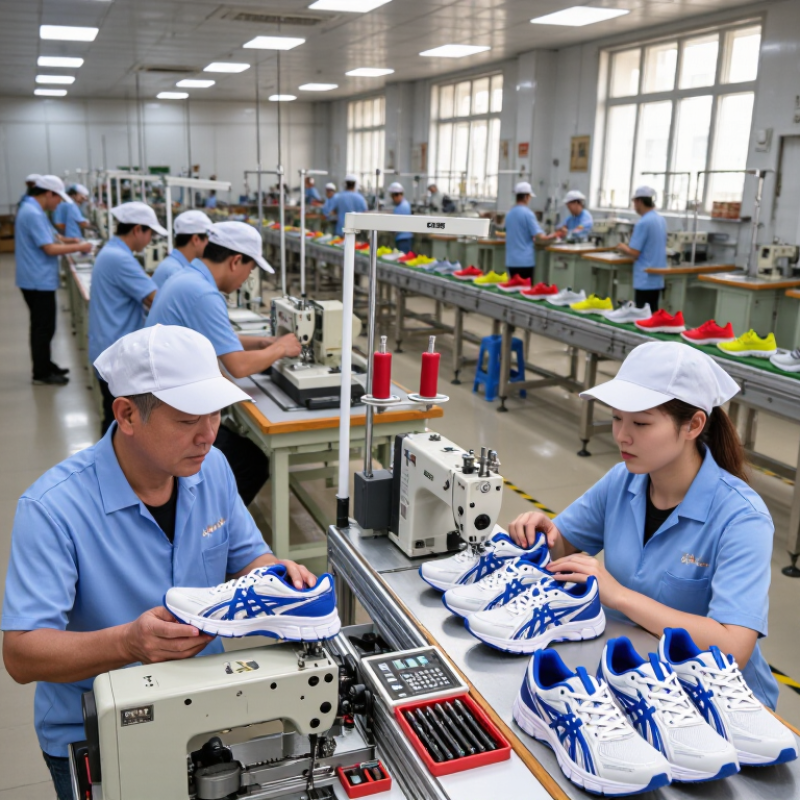
In 2023, global footwear production reached an estimated 23.9 billion pairs. That figure shows scale, not the athletic share or each pair’s country of origin. For buyers seeking Korean athletic footwear manufacturers in 2026, it offers useful context: competition is broad, and production capacity alone does not prove a good fit. Ask how a factory handles your specific construction, materials, and order volume. Small details matter, such as reinforced toe stitching, outsole grip, and consistent sizing across a sample run.
Korean suppliers may offer experience with technical development and export production, but capabilities vary by facility. Verify them directly. Request recent samples, a clear production timeline, and written details on minimum order quantities and quality checks. If possible, compare the approved sample with a production pair under the same inspection criteria. A polished sample can hide a mismatch. The 23.9-billion-pair estimate also has limits: broad market totals cannot tell you a supplier’s available capacity, lead time, or reliability in 2026.
Tips: Ask for a factory walkthrough or live video tour. Confirm which processes happen on-site and which are subcontracted. Record measurements and defect tolerances before sampling. Keep one reference pair for later comparison.
Define Athletic Footwear with HS 640411 and Related Customs Codes
HS 6404.11 is a useful starting point for athletic footwear with textile uppers and outer soles made of rubber or plastics.
It specifically covers sports footwear, including tennis, basketball, gym, and training shoes.
Details matter.
A shoe’s intended use alone does not determine its code; materials and construction also count.
Related classifications may apply when the shoe’s materials differ. For example, some sports footwear with rubber or plastic uppers and soles may fall under HS 6402.19. Other textile-upper footwear may be considered under 6404.19, while leather-soled footwear can involve 6404.20. National tariff codes often add digits beyond the international six-digit HS code. Ask Korean manufacturers for material specifications, outsole and upper details, and clear product photographs. Compare those records with the code being proposed by your customs broker or import specialist.
A neat label is not proof.
I would verify the classification for each style, because small design changes can affect the assessment, and supplier descriptions are not always precise.
Map Korean Suppliers Using KITA Export and KOSIS Manufacturing Data
Finding Korean athletic footwear manufacturers in 2026 starts with two different data views: trade flows and factory activity. KITA export statistics can show where footwear shipments leave Korea, by product category, destination, and period. Use the closest available HS footwear codes, then compare annual and monthly movement. A shipment is evidence of trade, not proof that the exporter owns a factory. Important distinction.
KOSIS adds the production-side view. Search manufacturing tables under footwear-related industry classifications, and note whether figures count establishments, workers, or output. Classification boundaries may group athletic shoes with broader footwear, so avoid treating one number as a complete supplier list. A map can look precise and still be incomplete. That’s the awkward part.
Combine the sources by region and category, then build a shortlist rather than declaring winners. Check each candidate’s Korean business details, factory address, product range, and recent production evidence. Ask whether cutting, stitching, lasting, and final assembly happen in-house; these stages may be split across sites. Request a current capacity range and sample timeline, then compare answers against public data. If export and manufacturing signals disagree, investigate before excluding the firm. Data lag, coding changes, and trading intermediaries can distort the picture. I would record the source date beside every lead; it is a small discipline, but easy to neglect.
Mapping Korean Athletic Footwear Suppliers: KITA Export and KOSIS Manufacturing Data
The bars show the number of digits in each HS classification level: the international system uses 2-, 4-, and 6-digit levels, while Korea’s tariff schedule extends codes to 10 digits. Use relevant footwear codes to filter trade records, then cross-reference KOSIS manufacturing statistics by industry classification. HS product codes and KOSIS industry codes describe different things and require a classification crosswalk; these bars show code structure, not export values or supplier counts.
Compare Factory Capacity, MOQ, and Lead Times with Your Order Forecast
When comparing Korean athletic footwear manufacturers in 2026, match their usable production capacity to your actual order forecast, not their largest advertised output. Ask how many pairs they can make monthly for your construction, materials, and size range. A line producing simple knit uppers may not handle a more complex sole design at the same pace. Request recent capacity figures and clarify whether they include other customers’ orders. Do not assume a factory’s full capacity is available to you. That gap can disrupt a launch. Small batches matter. Check whether the quoted volume is per style, color, or total order.
Compare minimum order quantities with your forecast by style and color. For example, a 1,200-pair MOQ may look workable overall but become difficult when divided across six colors and several sizes. Ask whether a pilot run is possible, and confirm any extra cost or longer setup time. Lead times should cover material sourcing, sample approval, production, and inspection—not just sewing days. Ask for a stage-by-stage schedule and identify which dates depend on your decisions. A common planning mistake is treating a sample approval delay as harmless. Build in room. Record assumptions in writing, then revisit the forecast if demand changes; estimates are useful, but they are not guarantees.
How to Find Korean Athletic Footwear Manufacturers in 2026 - Compare Factory Capacity, MOQ, and Lead Times with Your Order Forecast
Use the forecast scenarios below to compare anonymized supplier quotes. Capacity figures are calculated from the stated order volume and production window; MOQ limits and lead times are buyer-set screening targets, not verified factory specifications. Confirm all supplier data in writing.
| Order Forecast Scenario |
Forecast Volume |
Target Production Window |
Minimum Monthly Capacity Required |
Buyer MOQ Ceiling |
Buyer Lead-Time Target |
Supplier Data to Verify |
| Pilot launch |
12,000 pairs |
3 months |
4,000 pairs per month |
1,200 pairs (10% of forecast) |
Up to 90 calendar days |
MOQ by style, color, and size; sample approval schedule; available production slot |
| Core seasonal order |
30,000 pairs |
3 months |
10,000 pairs per month |
3,000 pairs (10% of forecast) |
Up to 105 calendar days |
Monthly output for comparable footwear; line allocation; material procurement and inspection timeline |
| Expanded seasonal order |
60,000 pairs |
3 months |
20,000 pairs per month |
6,000 pairs (10% of forecast) |
Up to 120 calendar days |
Capacity allocation by month; subcontracting disclosure; shipment split and quality-control plan |
Calculation: minimum monthly capacity required = forecast volume ÷ production window in months. MOQ ceiling is a suggested buyer screening rule, not an industry standard. Lead-time targets should be measured from confirmed specifications, approved samples, and deposit to goods ready for shipment; ask each supplier to state exclusions and assumptions.
Verify Flex Resistance and Sole Adhesion with ISO 17707 and ISO 17708
How to Find Korean Athletic Footwear Manufacturers in 2026
When evaluating Korean athletic footwear manufacturers, ask how they test flex resistance and sole adhesion—not just whether they “pass.” ISO 17707 covers flex resistance of outsoles, while ISO 17708 addresses adhesion between the upper and sole in whole shoes. Request test reports tied to the shoe’s exact materials, construction, and production batch. Check conditioning details, test results, and recorded failure modes. A tiny crack near the forefoot matters. So does a sole edge that begins lifting after repeated flexing.
Tips: Ask for recent reports and confirm the tested sample matches your intended model. For added confidence, arrange independent testing on production-line samples, not only hand-finished prototypes.
Compare results across several sizes or batches where practical. Discuss acceptable limits with a qualified laboratory; a single result rarely tells the whole story. A clean report can still miss variation between shifts or material lots. I would also inspect returned samples after testing, because numbers alone can feel reassuring without showing where wear begins. Keep the test records, sample identifiers, and corrective actions together, then repeat checks after any material or construction change.